In today’s homes, the electric cooker stands as a central appliance, consistently delivering warmth and delicious meals. But as energy costs fluctuate and environmental consciousness grows, a common question arises: Do electric cookers use a lot of power? Understanding your electric cooker’s energy consumption is key to managing household expenses and adopting more sustainable kitchen practices. This comprehensive guide will delve into how much electricity these appliances truly consume, what factors influence their power usage, and practical strategies to make your cooking more energy-efficient.
Unpacking Electric Cooker Power Consumption
Electric cookers, often encompassing both stovetop burners and an oven, can be significant contributors to your electricity bill. The total wattage of an electric range typically falls between 3,000 and 8,000 watts when multiple elements are in use. To break it down further, individual components have varying power demands.
Electric ovens generally draw between 2,000 and 5,000 watts, with many modern residential models averaging around 3,000 watts. Cooktop burners vary by size, with smaller elements consuming about 1,000 to 1,500 watts and larger or rapid-boil elements potentially reaching up to 3,000-3,500 watts. This translates to an electric oven using approximately 2.5 to 4.5 kilowatt-hours (kWh) per hour of cooking, though actual usage often cycles, bringing the effective consumption closer to 2 kWh per hour. A typical US household might see an electric stove contribute around 73-85 kWh to their monthly energy bill if used daily for one hour at average power.
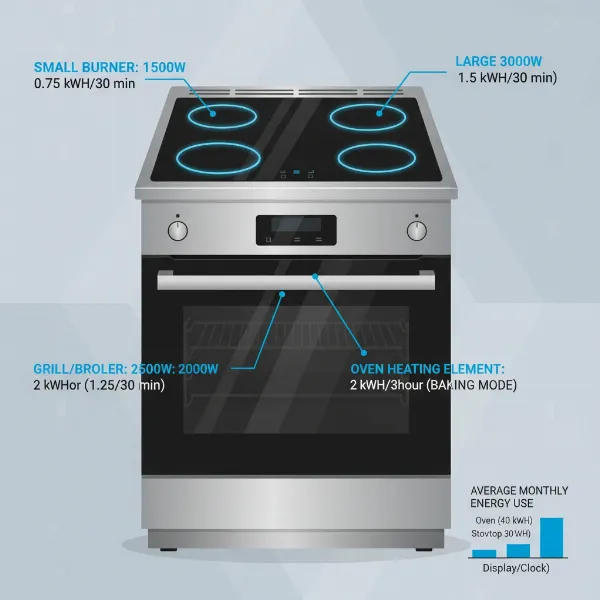 Visual representation of an electric cooker showing energy consumption breakdown in watts and kWh
Factors Influencing Your Electric Cooker’s Energy Use
Several variables play a crucial role in how much electricity your electric cooker consumes. Recognizing these can empower you to make more energy-conscious choices in the kitchen.
- Appliance Type and Age: Older electric cookers may be less energy-efficient than newer models. Induction cooktops, for example, are a type of electric cooker that stands out for superior efficiency due to their direct heating mechanism.
- Heat Settings and Cooking Duration: Higher temperatures and longer cooking times naturally require more energy. Maintaining a rolling boil for an extended period or roasting food at high heat will increase power usage.
- Cooking Habits: Frequent opening of the oven door allows heat to escape, forcing the appliance to work harder to maintain the desired temperature. Similarly, using the wrong size burner for your pot or pan leads to wasted heat.
- Cookware Quality and Type: Flat-bottomed, high-quality cookware, especially those made of copper or compatible with induction, transfer heat more efficiently. Glass or ceramic bakeware can also allow you to cook at slightly lower oven temperatures.
- Food Preparation: Cooking frozen food directly in the oven demands more energy than cooking defrosted ingredients, as the appliance first needs to bring the food to temperature.
Understanding these factors is the first step toward optimizing your cooking process for energy savings.
Comparing Electric Cookers to Other Cooking Methods
When considering energy consumption, it’s insightful to compare traditional electric cookers with other common kitchen appliances, particularly induction cooktops and slow cookers.
Induction Cooktops
|
Our Picks for the Best Electric cooker in 2026
As an Amazon Associate I earn from qualifying purchases.
|
||
| Num | Product | Action |
|---|---|---|
| 1 | Dezin Hot Pot Electric with Steamer Upgraded, Non-Stick Sauté Pan, Rapid Noodles Electric Pot, 1.5L Mini Pot for Steak, Egg, Fried Rice, Ramen, Oatmeal, Soup with Power Adjustment |

|
| 2 | Dezin Hot Pot Electric with Steamer Upgraded, Non-Stick Sauté Pan, Rapid Noodles Electric Pot, 1.5L Mini Pot for Steak, Egg, Fried Rice, Ramen, Oatmeal, Soup with Power Adjustment |
|
| 3 | Dezin Hot Pot Electric with Steamer Upgraded, Non-Stick Sauté Pan, Rapid Noodles Electric Pot, 1.5L Mini Pot for Steak, Egg, Fried Rice, Ramen, Oatmeal, Soup with Power Adjustment |
|
| 4 | Dezin Hot Pot Electric with Steamer Upgraded, Non-Stick Sauté Pan, Rapid Noodles Electric Pot, 1.5L Mini Pot for Steak, Egg, Fried Rice, Ramen, Oatmeal, Soup with Power Adjustment |
|
| 5 | Dezin Hot Pot Electric Upgraded, Non-Stick Sauté Pan, Rapid Noodles Electric Pot, 1.5L Mini Portable Hot Pot for Steak, Egg, Fried Rice, Ramen, Oatmeal, Soup with Power Adjustment |
|
| 6 | Pink 1L Ceramic Slow Cooker with Steamer Basket, 200W Mini Electric Stew Pot, 24-Hour Delayed Start & Auto Keep-Warm, Household Kitchen Safety Dry-Burn Protection Porridge & Soup Pot |
|
| 7 | Instant Pot Duo 7-in-1 Mini Electric Pressure Cooker, Slow Rice Cooker, Steamer, Sauté, Yogurt Maker, Warmer & Sterilizer, Includes Free App with over 1900 Recipes, Stainless Steel, 3 Quart |
|
| 8 | Elite Gourmet EG808 8” x 8" Non-stick Electric Skillet, Dishwasher Safe with Tempered Glass Vented Lid, Rapid Heat Up, 600W, Black |
|
| 9 | AMZCHEF Portable Induction Cooktop 20 Temperature & Power Levels, 1800W Induction Stove Burner with 6.8" Heating Coil, Low Noise Hot Plate Single Electric Cooktops Countertop Stove with Timer |
|
| 10 | Green 1L Mini Slow Cooker with Steamer Basket, 200W Smart Ceramic Electric Stew Pot, 24-Hour Timer & Auto Keep-Warm, Dry-Burn Protection, Kitchen Cooking Appliance |
|
Induction cooking technology represents a significant leap in efficiency for electric cooking. Unlike conventional electric cooktops that heat a surface, which then transfers heat to the cookware, induction cooktops use electromagnetic fields to directly heat the pot or pan. This direct transfer means very little energy is lost to the surrounding air.
“Induction cooktops are remarkably efficient, boasting up to 90% heat transfer directly to the cookware, whereas traditional electric stoves typically achieve 70-75% efficiency.” – Lan Nguyen, Expert Technician, ElectricCookerReview.com
This higher efficiency translates to faster cooking times and lower overall energy consumption. While induction cooktops often have a higher initial purchase price, the long-term energy savings on utility bills can offset this investment. They also offer precise temperature control, similar to gas, but without the open flame.
Slow Cookers
For meals that require long cooking durations, slow cookers are an unexpectedly energy-efficient alternative to conventional ovens. Operating at lower wattages (typically 70 to 250 watts) over extended periods, they use significantly less electricity than an oven. For example, a slow cooker might use around 0.7 kWh for a meal that would consume 2 to 2.2 kWh in an electric oven. This makes them ideal for stews, soups, and casseroles that simmer for hours, providing a cost-effective cooking solution for such dishes.
Practical Tips for Reducing Electric Cooker Energy Consumption
Optimizing your electric cooker’s energy use doesn’t require a complete kitchen overhaul. Simple adjustments to your cooking habits and appliance maintenance can lead to noticeable savings.
Maximize Efficiency with Smart Cooking Practices
- Match Cookware to Burner Size: Always use pots and pans that match the size of the burner. A small pot on a large burner wastes up to 40% of the heat and energy.
- Use Lids on Pots and Pans: Covering your cookware traps heat and moisture, allowing food to cook faster and requiring less energy. This can reduce energy use by up to 66%.
- Utilize Residual Heat: Electric elements and ovens retain heat after being turned off. For dishes that don’t require precise timing, turn off the heat a few minutes before the food is fully cooked; the residual heat will finish the job.
- Minimize Oven Door Opening: Every time you open the oven door, the temperature inside can drop by as much as 25 degrees, forcing the oven to consume more energy to reheat. Use the oven light or glass panel to check on food.
- Cook Multiple Dishes at Once: When using the oven, plan meals to cook several items simultaneously. This maximizes the use of preheated oven space and reduces the need to operate the oven multiple times.
- Defrost Food Thoroughly: Ensure frozen ingredients are fully defrosted in the refrigerator before cooking. This reduces the energy needed to bring the food to cooking temperature.
- Preheat Only When Necessary: While some recipes demand preheating, many dishes, especially those with longer cooking times (over an hour), can start in a cold oven without impacting results. For baking, use precise preheating times.
- Chop Food into Smaller Pieces: Smaller pieces of food cook faster, reducing the required cooking time and energy.
Invest in Energy-Efficient Appliances and Cookware
- Consider Induction or Smaller Appliances: If upgrading, an induction cooktop offers superior energy efficiency. For smaller tasks, a microwave, toaster oven, or slow cooker can be far more energy-efficient than a full-sized oven or stovetop.
- Choose Proper Cookware: Flat-bottomed pots and pans ensure maximum contact with the heating element. Glass or ceramic bakeware can allow you to lower oven temperatures by about 25 degrees Fahrenheit.
- Look for ENERGY STAR Labels: When buying new appliances, choose models with an ENERGY STAR certification, indicating they meet strict energy efficiency guidelines.
Maintain Your Electric Cooker
- Keep Appliances Clean: Clean stovetop burners, oven racks, and reflectors. A clean oven heats up faster and distributes heat more effectively, making it more energy-efficient. For self-cleaning ovens, run the cycle right after cooking while the oven is still hot to leverage residual heat.
- Ensure Proper Oven Door Sealing: Regularly check the oven door seal. A faulty seal allows heat to escape, increasing energy consumption.
By implementing these straightforward strategies, you can significantly reduce the energy consumption of your electric cooker, saving money on your utility bills and contributing to a greener household.
 Diverse family using energy-efficient practices in a modern kitchen with induction cooktop
Conclusion
Electric cookers are indispensable tools in our kitchens, but their energy consumption can be a concern. While they do use a notable amount of power, especially compared to their induction counterparts or smaller appliances like slow cookers for specific tasks, understanding how they operate is the first step toward more efficient use. By adopting smart cooking habits, choosing appropriate cookware, and maintaining your appliances, you can significantly reduce your electric cooker’s energy footprint.
The journey to an energy-efficient kitchen is continuous, and every small change makes a difference. What other areas in your kitchen have you found opportunities to save energy?
Frequently Asked Questions
Is an electric oven expensive to run?
The cost to run an electric oven depends on its wattage, usage frequency, and local electricity rates. A typical 3,000-watt electric oven might consume around 2 kWh per hour of use. If used regularly, this can contribute significantly to your monthly electricity bill, but implementing energy-saving tips can help reduce these costs.
Do induction cookers save electricity compared to traditional electric cookers?
Yes, induction cookers are significantly more energy-efficient than traditional electric cooktops. They transfer heat directly to the cookware, achieving up to 90% efficiency, compared to 70-75% for conventional electric stoves. This results in faster cooking and less wasted energy, leading to lower electricity bills over time.
How much electricity does an electric kettle use versus an electric stove to boil water?
An electric kettle is generally more energy-efficient for boiling water than an electric stove. Kettles typically heat a smaller volume of water more quickly and with less heat loss, concentrating energy directly on the water.
Can I save energy by using a microwave instead of an electric oven?
For reheating or cooking small portions, a microwave oven is often much more energy-efficient than a full-sized electric oven. Microwaves heat food directly and quickly, using significantly less power for shorter durations.
Does the size of my electric cooker affect its energy consumption?
Yes, generally, larger Electric Cookers and ovens have higher wattage ratings and thus consume more electricity. However, efficiency also plays a role, with newer, well-insulated, and technologically advanced models often being more efficient even at larger sizes.