We’ve all been there: a perfectly cooked meal, particularly a batch of fluffy rice, is ready, but your family isn’t quite at the table yet. This is where your electric cooker’s “keep warm” function shines, offering a convenient way to maintain food temperature. While incredibly useful, understanding how to use this feature safely and effectively is paramount to preserving both the quality of your food and, more importantly, your family’s health. This guide will delve into the best practices, critical safety considerations, and common misconceptions surrounding your electric cooker’s warming capabilities.
Understanding Your Electric Cooker’s Keep Warm Function
The “keep warm” function on your electric cooker is designed as a holding stage, not a cooking or reheating one. Once your food, typically rice, has finished cooking, the appliance automatically switches to a lower power setting. This maintains a consistent temperature, generally above 140°F (60°C), preventing the food from cooling down rapidly. The primary benefit is convenience, allowing for flexibility in serving times without needing to immediately transfer or reheat your meal. It ensures your food remains at an enjoyable eating temperature, ready when you are.
The Critical Role of Food Safety
When using any appliance to keep food warm, food safety is not just a recommendation; it’s a critical requirement. Bacteria multiply most rapidly in what’s known as the “danger zone,” which spans temperatures between 40°F and 140°F (4°C and 60°C). Cooked rice, in particular, can harbor spores of Bacillus cereus, a common bacterium that can cause food poisoning. While these spores are typically harmless during cooking, they can quickly grow and produce heat-resistant toxins if the rice is left to cool slowly or remains in the danger zone for too long. These toxins, once formed, cannot be destroyed by reheating, making proper temperature maintenance essential. Therefore, your electric cooker’s “keep warm” setting must consistently keep food above 140°F (60°C) to inhibit bacterial growth.
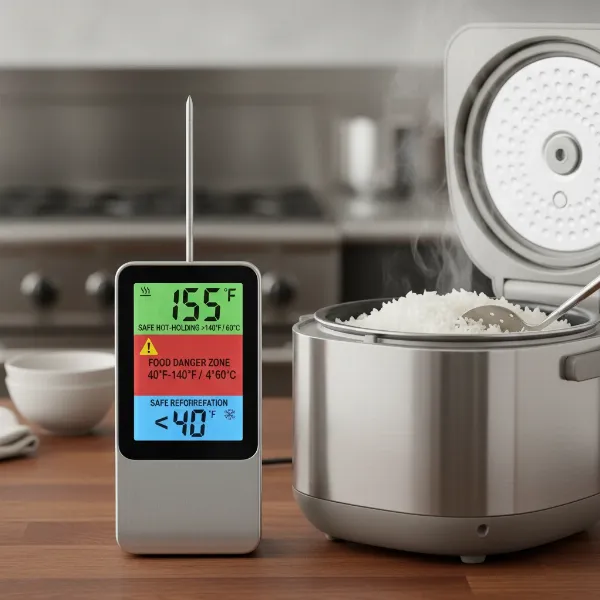 Food thermometer illustrating safe temperatures, danger zone for bacterial growth in cooked food.
How Long is Too Long? Recommended Time Limits
The duration for which food can safely and deliciously remain on the “keep warm” setting is a frequently debated topic. While some advanced electric cookers, often referred to as “fuzzy logic” models, claim to maintain quality and safety for up to 12 or even 24 hours with “Extended Keep Warm” features, general food safety guidelines and most manufacturers recommend shorter durations. For basic electric cookers, it’s typically advised to keep food warm for no longer than 2-4 hours to ensure optimal taste and texture. Exceeding these limits, even in higher-end models, can lead to a decline in food quality, with rice potentially drying out, hardening, or becoming mushy and discolored. The risk of bacterial growth also increases over time, making prompt serving after cooking the safest option. Always consult your specific appliance’s manual for its recommended maximum warming time.
Best Practices for Safe and Delicious Results
To maximize the benefits of your electric cooker’s “keep warm” function while minimizing risks, adhere to these essential practices:
- Cook Thoroughly First: The “keep warm” function is not designed to finish cooking food. Ensure all food is fully cooked to safe internal temperatures before engaging the warming mode.
- Avoid Reheating: Never use the “keep warm” function to reheat cold leftovers. Food should be reheated to 165°F (74°C) using appropriate methods (microwave, stovetop, oven) before being transferred to a warming appliance, if necessary, for a short period.
- Keep the Lid Closed: Resist the urge to frequently open the lid. This helps maintain the internal temperature, traps moisture, and prevents heat loss, all crucial for food safety and preventing your meal from drying out.
- Use Clean Utensils: Always use clean serving utensils. Introducing unwashed spoons or paddles can introduce bacteria into your warm food, compromising its safety.
- Do Not Mix Temperatures: Never add cold, freshly cooked food or leftovers into an electric cooker already holding warm food. This can significantly lower the overall temperature of the contents, potentially dropping it into the “danger zone” where bacteria can thrive.
- Serve Promptly: For the best taste, texture, and safety, aim to serve food as soon as possible after it has finished cooking. The “keep warm” function is a short-term solution, not a storage method.
- For Long-Term Storage: If you have leftovers, cool them rapidly within two hours of cooking by dividing them into shallow containers and refrigerating or freezing them promptly. Do not rely on the “keep warm” function for extended storage.
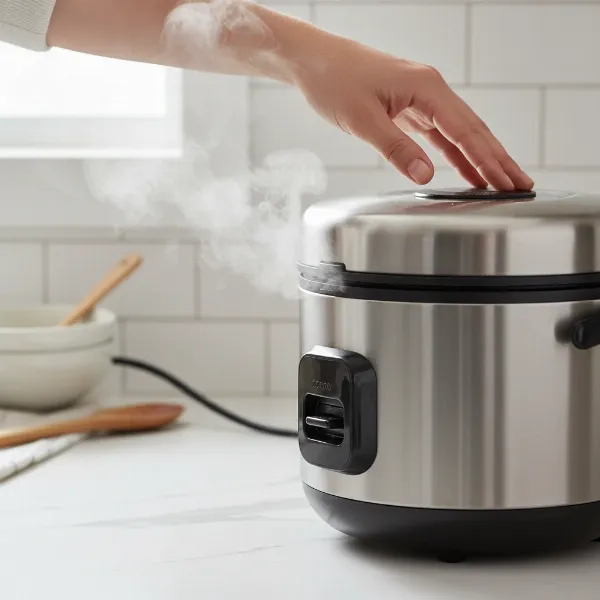 Hand closing the lid of an electric rice cooker to maintain warmth and moisture.
Beyond Rice: Other Foods and Considerations
While the “keep warm” function is predominantly associated with electric rice cookers, some multi-functional electric cookers might offer warming settings for other dishes like stews or soups. However, the same stringent food safety guidelines apply. Foods with high moisture content or those containing meat, poultry, or dairy can be more susceptible to bacterial growth if not held at appropriate temperatures. Always ensure these foods reach a safe internal temperature during cooking and are maintained consistently above 140°F (60°C) when warming. When in doubt, it’s always safer to transfer these foods to another warming method, like a low oven, or to simply reheat them just before serving.
Troubleshooting and Maintenance for Longevity
Even with proper use, you might encounter minor issues or questions regarding your electric cooker’s “keep warm” function. If food seems to be drying out, try adding a small amount of extra water or broth to the pot before engaging the warming function, and ensure the lid forms a tight seal. If rice becomes mushy, it could indicate too much moisture initially or too long a warming period; adjust your cooking water or serving time accordingly. For consistent performance, regular cleaning of your electric cooker is vital. Always unplug the appliance and allow it to cool completely before cleaning the inner pot, lid, and heating plate. Check for any damage to seals or heating elements, as these can affect temperature maintenance. Always refer to your appliance’s instruction manual for specific cleaning and maintenance guidelines.
Conclusion
The “keep warm” function of your electric cooker is a truly convenient feature that can streamline meal preparation, ensuring warm, ready-to-serve food whenever you need it. By adhering to recommended time limits, understanding critical food safety temperatures, and practicing good kitchen hygiene, you can enjoy the benefits of this function without compromising on health or taste. Always remember that while modern appliances offer extended capabilities, the core principles of cooking safely remain paramount. What are your most cherished dishes that benefit from the electric cooker’s “keep warm” function, and how do you ensure their safety and deliciousness?
Frequently Asked Questions
How long can I safely keep rice warm in an electric cooker?
|
Our Picks for the Best Electric cooker in 2026
As an Amazon Associate I earn from qualifying purchases.
|
||
| Num | Product | Action |
|---|---|---|
| 1 | Dezin Hot Pot Electric with Steamer Upgraded, Non-Stick Sauté Pan, Rapid Noodles Electric Pot, 1.5L Mini Pot for Steak, Egg, Fried Rice, Ramen, Oatmeal, Soup with Power Adjustment |

|
| 2 | Green 1L Mini Slow Cooker with Steamer Basket, 200W Smart Ceramic Electric Stew Pot, 24-Hour Timer & Auto Keep-Warm, Dry-Burn Protection, Kitchen Cooking Appliance |
|
| 3 | Dezin Hot Pot Electric with Steamer Upgraded, Non-Stick Sauté Pan, Rapid Noodles Electric Pot, 1.5L Mini Pot for Steak, Egg, Fried Rice, Ramen, Oatmeal, Soup with Power Adjustment |
|
| 4 | Dezin Hot Pot Electric with Steamer Upgraded, Non-Stick Sauté Pan, Rapid Noodles Electric Pot, 1.5L Mini Pot for Steak, Egg, Fried Rice, Ramen, Oatmeal, Soup with Power Adjustment |
|
| 5 | Dezin Hot Pot Electric with Steamer Upgraded, Non-Stick Sauté Pan, Rapid Noodles Electric Pot, 1.5L Mini Pot for Steak, Egg, Fried Rice, Ramen, Oatmeal, Soup with Power Adjustment |
|
| 6 | Elite Gourmet EG808 8” x 8" Non-stick Electric Skillet, Dishwasher Safe with Tempered Glass Vented Lid, Rapid Heat Up, 600W, Black |
|
| 7 | Dezin Hot Pot Electric Upgraded, Non-Stick Sauté Pan, Rapid Noodles Electric Pot, 1.5L Mini Portable Hot Pot for Steak, Egg, Fried Rice, Ramen, Oatmeal, Soup with Power Adjustment |
|
| 8 | Instant Pot Duo 7-in-1 Mini Electric Pressure Cooker, Slow Rice Cooker, Steamer, Sauté, Yogurt Maker, Warmer & Sterilizer, Includes Free App with over 1900 Recipes, Stainless Steel, 3 Quart |
|
| 9 | Pink 1L Ceramic Slow Cooker with Steamer Basket, 200W Mini Electric Stew Pot, 24-Hour Delayed Start & Auto Keep-Warm, Household Kitchen Safety Dry-Burn Protection Porridge & Soup Pot |
|
| 10 | AMZCHEF Portable Induction Cooktop 20 Temperature & Power Levels, 1800W Induction Stove Burner with 6.8" Heating Coil, Low Noise Hot Plate Single Electric Cooktops Countertop Stove with Timer |
|
For optimal safety and quality, most food safety experts recommend keeping rice warm in an electric cooker for no longer than 4 to 12 hours, depending on the model. Some advanced models with “Extended Keep Warm” features might maintain quality for up to 24 hours, but prompt serving is always best.
Can I put other foods besides rice in the “keep warm” function?
While the function is primarily designed for rice, some electric cookers can keep other foods like stews or soups warm. Always ensure these foods are cooked thoroughly first and maintained above 140°F (60°C) to prevent bacterial growth.
What temperature does the “keep warm” function maintain?
Most electric cooker “keep warm” functions are designed to maintain food at or above 140°F (60°C), which is the minimum safe temperature to inhibit rapid bacterial growth, according to food safety guidelines.
What happens if I leave food in “keep warm” mode too long?
Leaving food in “keep warm” mode for too long can lead to several issues: the food may dry out, harden, become mushy, or turn discolored. More critically, prolonged warming, especially below safe temperatures, can encourage bacterial growth, potentially leading to food poisoning.
How do I clean my electric cooker after using the “keep warm” function?
Always unplug the Electric Cooker and allow it to cool completely. Remove the inner pot and wash it with warm, soapy water. Wipe down the exterior and the heating plate with a damp cloth, ensuring no moisture enters the electrical components. Refer to your specific model’s manual for detailed cleaning instructions.