The allure of the open road and the tranquility of nature are often perfectly complemented by the aroma of a delicious, home-cooked meal. While traditional campfires and propane stoves have their place, relying on electric cookers when you have a power hookup can transform your campsite culinary experience, offering unparalleled convenience, safety, and efficiency. Whether you’re in an RV, a tent with an electrical pitch, or simply have access to an outdoor outlet, electric cookers unlock a world of possibilities, from simmering hearty stews to brewing your morning coffee with ease.
This comprehensive guide will navigate you through the diverse landscape of electric cooking appliances suitable for camping, focusing on crucial features like power consumption and portability. We’ll delve into the different types available, highlight top-performing models, and equip you with essential tips for safe and enjoyable outdoor cooking with your reliable electric companion. Get ready to elevate your camping cuisine and savor every moment under the stars.
Understanding Electric Cooker Types for Camping
Choosing the right electric cooker for your camping adventures begins with understanding the various types available, each offering distinct advantages for campsite cooking. The most common options include coil burners, cast-iron hot plates, infrared burners, and advanced induction cooktops.
- Portable Electric Burners (Coil/Cast Iron): These are often the most straightforward and budget-friendly options. Coil burners feature exposed heating elements, while cast-iron hot plates have a solid surface that heats up. They are simple to operate and generally reliable for basic cooking tasks. However, coil burners can be challenging to clean if food spills, and some cast-iron models might take longer to cool down.
- Infrared Burners: Offering a step up in performance, infrared burners utilize radiant coils beneath a ceramic glass surface. They heat up quickly and evenly, working with all types of cookware, from aluminum to glass. The flat surface is also easier to clean than exposed coils, making them a practical choice for outdoor use.
- Induction Cooktops: Often considered the most efficient and precise portable electric cooking solution, induction cooktops use electromagnetism to directly heat compatible (magnetic) cookware. This means the cooking surface itself remains relatively cool, reducing burn risks and improving energy efficiency. Induction burners offer fast heating, precise temperature control, and often come with advanced safety features like auto-pan detection and overheat protection. They require specific magnetic pots and pans, a factor to consider before purchase.
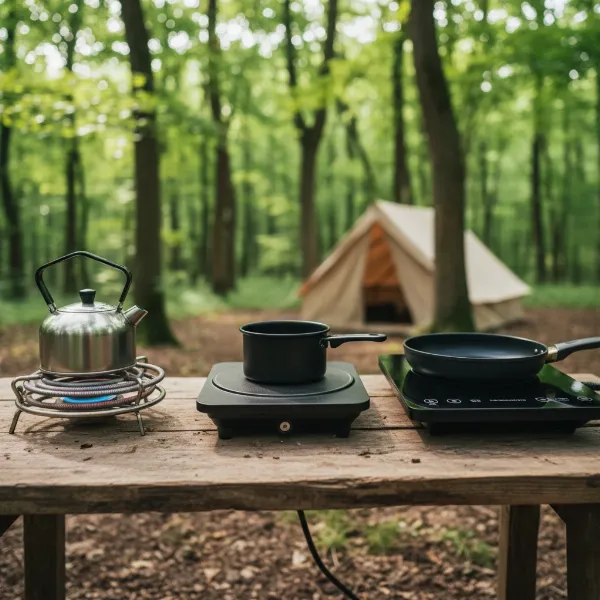 Different types of portable electric burners for camping, showing coil, cast iron, and induction. A visual guide for choosing the right one.
Key Features for Choosing Your Camping Electric Cooker
Selecting the perfect electric cooker for your powered campsite requires careful consideration of several critical features. These factors will ensure your appliance performs optimally and safely within the confines of outdoor electrical hookups.
The power consumption, measured in watts, is paramount. Campsite hookups typically have wattage limits, often around 15-20 amps (approximately 1800-2400 watts at 120V). A single burner consuming between 1000W and 1800W is generally a safe bet, allowing you to run other essential appliances simultaneously. Be cautious with double burner units, as running both elements at high power can easily exceed a campsite’s limit, potentially tripping the breaker.
Portability and size are also essential for camping gear. Look for compact, lightweight models that are easy to pack, carry, and store in an RV or tent. Appliances with slim profiles or integrated carrying handles enhance convenience.
Durability is crucial for an item that will face the rigors of outdoor environments. Stoves built from robust materials are more likely to withstand bumps, temperature changes, and repeated use on various surfaces.
Safety features are non-negotiable, especially in a bustling campsite. Automatic shut-off mechanisms prevent overheating, while non-slip feet ensure stability on uneven picnic tables. Induction cooktops often include additional safety measures like child lockouts and auto-pan detection, which only activate the burner when a compatible pot is in place.
Cooking performance and control contribute significantly to your culinary success. Look for models that offer consistent heat distribution and adjustable temperature settings, allowing for precise control whether you’re searing, simmering, or just keeping food warm. Induction cooktops are particularly praised for their granular control.
Finally, ease of cleaning is a major benefit in a camping context where water access might be limited. Flat, smooth surfaces, like those found on infrared and induction burners or cast-iron hot plates, are typically much easier to wipe down than coil-style burners, which can trap food debris. Consider cookware compatibility, especially if you opt for an induction unit, as it requires magnetic pots and pans.
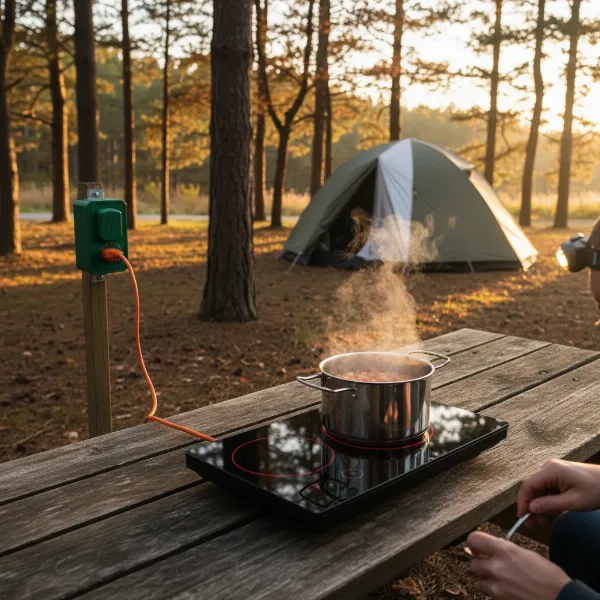 A compact electric cooker in use at a campsite, safely preparing a meal with proper power cord management.
Top Electric Cookers Recommended for Campsite Use
Several electric cookers stand out for their suitability and performance in a camping environment with power hookups. Each offers a unique blend of features catering to different needs and budgets.
The Cuisinart Cast-Iron Single Burner is a top contender for its overall balance of power, durability, and value. This 1,300-watt unit heats quickly and holds heat effectively and evenly, making it excellent for various cooking tasks, from frying eggs to simmering. Its flat cast-iron top is also easy to clean.
For a more compact solution, the CUSIMAX Electric Hot Plate offers an impressive 1,500 watts of power in a small footprint. While it can get quite hot externally on high settings, it’s ideal for lower-temperature slow-cooking or as an extra burner when space is limited. Its cast-iron material helps it hold heat efficiently.
Campers on a tighter budget might consider the Imusa Electric Single Burner. This 1,100-watt coil burner provides surprisingly good power for its low cost and small size. It features variable temperature control, though its coil design can be harder to clean, and it’s recommended for shorter cooking durations due to automatic overheat shut-off.
When precision and energy efficiency are priorities, the Duxtop 9600LS Portable Induction Cooktop is an excellent choice. This 1,800-watt induction burner is lightweight, durable, and boasts 20 power levels for precise control. It includes robust safety features such as auto-pan detection, overheat protection, and a child lockout. While it requires magnetic cookware and may not bring water to a full boil at extreme temperatures like 212°F, its overall performance is outstanding. According to Chris DiMaio, executive chef and owner of Montana Craft Kitchen, “An induction burner is powerful, quick at heating, and can hold temperatures to a single degree of accuracy, which makes it great for holding a steady temperature of water for, say, poaching eggs or even using it as a sous vide bath.”
Another versatile option is the Ovente Electric Infrared Burner. Operating at 1,000 watts, this unit heats quickly and, unlike induction, is compatible with all types of cookware. Its ceramic glass surface is easy to clean, and the infrared technology focuses heat on the cooking surface, keeping the base cooler.
While the BLACK+DECKER Double Burner Portable Buffet Range offers two burners, one at 1,000 watts and another at 500 watts, campers should be mindful of total wattage when using both simultaneously to avoid exceeding campsite electrical limits. It’s lightweight and useful for warming or cooking delicate items.
Detailed Comparison of Popular Camping Electric Cookers
| Feature | Cuisinart Cast-Iron Single Burner | CUSIMAX Electric Hot Plate | Imusa Electric Single Burner | Duxtop 9600LS Portable Induction Cooktop | Ovente Electric Infrared Burner |
|---|---|---|---|---|---|
| Type | Cast Iron | Cast Iron | Coil | Induction | Infrared |
| Max Power | 1300W | 1500W | 1100W | 1800W | 1000W |
| Number of Burners | 1 | 1 | 1 | 1 | 1 |
| Burner Diameter | 7.5 inches | 7.4 inches | 5.5 inches | 8 inches | 7.5 inches |
| Portability | Good | Good | Excellent | Excellent | Good |
| Durability | Durable workhorse | Durable | Basic | Durable | Durable |
| Cleaning | Easy wipe-down | Easy wipe-down | Harder to clean | Easy wipe-down | Easy wipe-down |
| Cookware Compatibility | All (flat bottom recommended) | All (flat bottom recommended) | All | Magnetic only | All (flat bottom recommended) |
| Special Notes | Holds heat effectively | Body gets very hot | Budget-friendly, small size | Precise control, safety features | Heats quickly, cool base |
Tips for Safe and Efficient Electric Cooking at Your Campsite
To ensure a safe and enjoyable cooking experience with your electric cooker while camping, adhere to these practical tips:
First, always confirm the wattage limits of your campsite hookup before plugging in your appliance. Most standard campsite outlets are 15 or 20 amps, which translates to 1800 or 2400 watts. Exceeding this limit can trip the circuit breaker, interrupting power to your site and potentially others. Using single-burner units or staggering the use of multiple high-wattage appliances can help manage power consumption.
Second, use appropriate cookware. For induction cooktops, only magnetic pots and pans will work. For other electric burners, flat-bottomed cookware is generally recommended for optimal heat transfer and stability. Avoid using plastic or non-heat-safe glass directly on any burner.
Third, position your electric cooker on a stable, flat, and heat-resistant surface. This prevents accidental spills and reduces the risk of tipping. Keep the area around the cooker clear of flammable materials, such as tent fabric or dry leaves.
Fourth, manage power cords safely and keep them dry. Ensure cords are fully uncoiled to prevent overheating and are routed away from walking paths to avoid tripping hazards. Protect connections from moisture, especially in damp outdoor conditions, by using weather-appropriate covers if possible.
Finally, clean your electric cooker thoroughly after each use. Food spills can burn onto heating elements or surfaces, creating odors and potentially attracting wildlife. For glass-top surfaces, a simple wipe-down is usually sufficient once cooled. For coil burners, gentle cleaning with a damp cloth is recommended, avoiding submersion. Proper maintenance extends the life of your appliance and maintains hygiene.
Conclusion
Embracing an electric cooker for your camping adventures with power hookups offers a blend of comfort, consistency, and safety that traditional cooking methods often can’t match. From the precision of an induction cooktop to the straightforward reliability of a cast-iron hot plate, the market provides a diverse array of options to suit every camper’s needs and culinary ambitions. By carefully considering factors like power consumption, portability, durability, and safety features, you can confidently select an electric cooker that transforms your outdoor meals into delightful, hassle-free experiences. So, why not plug in, power up, and enjoy the convenience of gourmet camping cuisine on your next wilderness escape?
Ready to upgrade your campsite kitchen? Which electric cooker feature is most important for your camping style?
Frequently Asked Questions
What wattage is safe for a campsite electric hookup?
|
Our Picks for the Best Electric cooker in 2026
As an Amazon Associate I earn from qualifying purchases.
|
||
| Num | Product | Action |
|---|---|---|
| 1 | Dezin Hot Pot Electric with Steamer Upgraded, Non-Stick Sauté Pan, Rapid Noodles Electric Pot, 1.5L Mini Pot for Steak, Egg, Fried Rice, Ramen, Oatmeal, Soup with Power Adjustment |

|
| 2 | Dezin Hot Pot Electric with Steamer Upgraded, Non-Stick Sauté Pan, Rapid Noodles Electric Pot, 1.5L Mini Pot for Steak, Egg, Fried Rice, Ramen, Oatmeal, Soup with Power Adjustment |
|
| 3 | Green 1L Mini Slow Cooker with Steamer Basket, 200W Smart Ceramic Electric Stew Pot, 24-Hour Timer & Auto Keep-Warm, Dry-Burn Protection, Kitchen Cooking Appliance |
|
| 4 | AMZCHEF Portable Induction Cooktop 20 Temperature & Power Levels, 1800W Induction Stove Burner with 6.8" Heating Coil, Low Noise Hot Plate Single Electric Cooktops Countertop Stove with Timer |
|
| 5 | Dezin Hot Pot Electric with Steamer Upgraded, Non-Stick Sauté Pan, Rapid Noodles Electric Pot, 1.5L Mini Pot for Steak, Egg, Fried Rice, Ramen, Oatmeal, Soup with Power Adjustment |
|
| 6 | Dezin Hot Pot Electric Upgraded, Non-Stick Sauté Pan, Rapid Noodles Electric Pot, 1.5L Mini Portable Hot Pot for Steak, Egg, Fried Rice, Ramen, Oatmeal, Soup with Power Adjustment |
|
| 7 | Dezin Hot Pot Electric with Steamer Upgraded, Non-Stick Sauté Pan, Rapid Noodles Electric Pot, 1.5L Mini Pot for Steak, Egg, Fried Rice, Ramen, Oatmeal, Soup with Power Adjustment |
|
| 8 | Instant Pot Duo 7-in-1 Mini Electric Pressure Cooker, Slow Rice Cooker, Steamer, Sauté, Yogurt Maker, Warmer & Sterilizer, Includes Free App with over 1900 Recipes, Stainless Steel, 3 Quart |
|
| 9 | Elite Gourmet EG808 8” x 8" Non-stick Electric Skillet, Dishwasher Safe with Tempered Glass Vented Lid, Rapid Heat Up, 600W, Black |
|
| 10 | Pink 1L Ceramic Slow Cooker with Steamer Basket, 200W Mini Electric Stew Pot, 24-Hour Delayed Start & Auto Keep-Warm, Household Kitchen Safety Dry-Burn Protection Porridge & Soup Pot |
|
Most campsite electric hookups are either 15-amp or 20-amp circuits. A 15-amp circuit typically supports up to 1800 watts, while a 20-amp circuit can handle up to 2400 watts. Always check the specific rating at your campsite and aim for electric cookers within these limits to prevent tripping breakers.
Can I use an induction cooktop when camping?
Yes, induction cooktops are an excellent choice for camping with power hookups. They are energy-efficient, offer precise temperature control, and heat quickly. Remember that induction cooktops require compatible magnetic cookware, so ensure your camping pots and pans are suitable.
How do I clean my portable electric burner while camping?
For flat-surface burners (induction, infrared, cast iron), allow the unit to cool completely, then wipe the surface with a damp cloth and mild soap. For coil burners, carefully wipe down the coils once cool, avoiding submerging the unit. Always ensure the cooker is unplugged before cleaning.
Are electric cookers more eco-friendly than gas stoves for camping?
Electric cookers can be more eco-friendly, especially if the electricity at your campsite is generated from renewable sources. They produce zero direct emissions during use, unlike propane or butane gas stoves, which release greenhouse gases. They also offer an alternative during burn bans.
What kind of cookware do I need for an induction camping stove?
For an induction camping stove, you will need cookware made from magnetic materials. This includes cast iron, enameled cast iron, and most stainless steel pots and pans. A simple test is to see if a magnet sticks firmly to the bottom of your cookware.