Hot pot is more than just a meal; it’s a culinary journey and a shared experience, a beloved tradition bringing people together around a simmering pot of flavorful broth. While the fresh ingredients and aromatic broth are essential, the dipping sauces are truly where the magic happens, transforming each bite into a personalized burst of flavor. If you’ve ever yearned to recreate the vibrant, customizable sauce bar experience found in your favorite hot pot restaurants, you’re in the right place. This guide will walk you through everything you need to know to set up an impressive hot pot dipping sauce station at home, ensuring every guest can craft their perfect accompaniment.
The Art of Hot Pot Dipping Sauce: Why Customization Matters
A hot pot dipping sauce station elevates your home dining experience, turning a simple meal into an interactive culinary adventure. It empowers each diner to become a sauce artisan, mixing and matching ingredients to suit their unique palate and the specific items they’re cooking in the hot pot. This level of personalization is a cornerstone of the hot pot tradition, making every meal memorable and deeply satisfying.
“The beauty of hot pot lies in its communal nature and individual customization. A well-stocked sauce bar is key to unlocking countless flavor possibilities for your guests.”
Essential Building Blocks: Ingredients for Your Sauce Bar
Creating a versatile dipping sauce station starts with a diverse selection of high-quality ingredients. Think of these as your palette, offering a spectrum of flavors—umami, spicy, tangy, nutty, and aromatic.
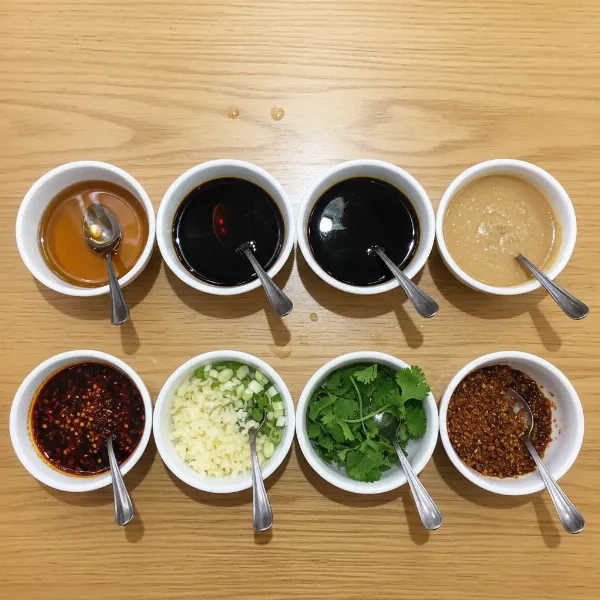 Various hot pot dipping sauce ingredients displayed in small bowls, ready for customization
Base Sauces: The Foundation of Flavor
These are the core liquids that form the body of your dips.
- Soy Sauce: Offer both light soy sauce for a saltier, more straightforward umami and dark soy sauce for a richer, slightly sweeter, and more visually appealing depth.
- Black Vinegar: Chinese black vinegar (Zhenjiang vinegar) provides a distinct malty, sweet-tart profile. Rice vinegar is a lighter, milder alternative.
- Sesame Paste/Tahini: Chinese sesame paste is thick and nutty, a foundational ingredient for creamy, rich sauces. Tahini can be used as a substitute.
- Shacha Sauce (Taiwanese BBQ Sauce): A savory, umami-rich paste with a hint of seafood, often a must-have for Taiwanese-style hot pot.
- Oyster Sauce: Adds a sweet and savory umami depth.
- Ponzu: A Japanese citrus-based soy sauce, offering a bright, tangy, and refreshing flavor, excellent for seafood and lighter broths.
- Miso Paste: Adds a deep, savory, and slightly sweet umami, especially good for Japanese-inspired sauces.
|
Our Picks for the Best Electric cooker in 2026
As an Amazon Associate I earn from qualifying purchases.
|
||
| Num | Product | Action |
|---|---|---|
| 1 | Dezin Hot Pot Electric with Steamer Upgraded, Non-Stick Sauté Pan, Rapid Noodles Electric Pot, 1.5L Mini Pot for Steak, Egg, Fried Rice, Ramen, Oatmeal, Soup with Power Adjustment |

|
| 2 | Instant Pot Duo 7-in-1 Mini Electric Pressure Cooker, Slow Rice Cooker, Steamer, Sauté, Yogurt Maker, Warmer & Sterilizer, Includes Free App with over 1900 Recipes, Stainless Steel, 3 Quart |
|
| 3 | Dezin Hot Pot Electric with Steamer Upgraded, Non-Stick Sauté Pan, Rapid Noodles Electric Pot, 1.5L Mini Pot for Steak, Egg, Fried Rice, Ramen, Oatmeal, Soup with Power Adjustment |
|
| 4 | AMZCHEF Portable Induction Cooktop 20 Temperature & Power Levels, 1800W Induction Stove Burner with 6.8" Heating Coil, Low Noise Hot Plate Single Electric Cooktops Countertop Stove with Timer |
|
| 5 | Elite Gourmet EG808 8” x 8" Non-stick Electric Skillet, Dishwasher Safe with Tempered Glass Vented Lid, Rapid Heat Up, 600W, Black |
|
| 6 | Pink 1L Ceramic Slow Cooker with Steamer Basket, 200W Mini Electric Stew Pot, 24-Hour Delayed Start & Auto Keep-Warm, Household Kitchen Safety Dry-Burn Protection Porridge & Soup Pot |
|
| 7 | Dezin Hot Pot Electric Upgraded, Non-Stick Sauté Pan, Rapid Noodles Electric Pot, 1.5L Mini Portable Hot Pot for Steak, Egg, Fried Rice, Ramen, Oatmeal, Soup with Power Adjustment |
|
| 8 | Green 1L Mini Slow Cooker with Steamer Basket, 200W Smart Ceramic Electric Stew Pot, 24-Hour Timer & Auto Keep-Warm, Dry-Burn Protection, Kitchen Cooking Appliance |
|
| 9 | Dezin Hot Pot Electric with Steamer Upgraded, Non-Stick Sauté Pan, Rapid Noodles Electric Pot, 1.5L Mini Pot for Steak, Egg, Fried Rice, Ramen, Oatmeal, Soup with Power Adjustment |
|
| 10 | Dezin Hot Pot Electric with Steamer Upgraded, Non-Stick Sauté Pan, Rapid Noodles Electric Pot, 1.5L Mini Pot for Steak, Egg, Fried Rice, Ramen, Oatmeal, Soup with Power Adjustment |
|
Flavor Boosters: Aromatic and Pungent Accents
These ingredients add zest, spice, and aromatic complexity.
- Chili Oil/Chili Crisp: Essential for heat and textural crunch. Offer a selection from mild to extra spicy.
- Fresh Garlic: Minced garlic is non-negotiable for most hot pot sauces, providing a pungent, aromatic kick.
- Fresh Ginger: Finely minced ginger adds a warm, spicy, and fragrant note.
- Scallions (Green Onions): Chopped scallions provide a fresh, oniony bite and vibrant color.
- Cilantro: Freshly chopped cilantro offers a bright, herbaceous, and slightly citrusy aroma that many hot pot enthusiasts adore.
- Sesame Oil: Toasted sesame oil adds a fragrant, nutty finish to any sauce.
- Sugar: A pinch of sugar can balance saltiness and acidity, enhancing overall flavor.
- Doubanjiang (Spicy Bean Paste): A fermented broad bean paste that adds a savory, spicy, and umami-rich depth, particularly popular in Sichuan hot pot.
- Fermented Bean Curd: Offers a unique savory, slightly tangy, and creamy texture.
Optional Add-ins: Texture and Depth
These extras provide additional layers of flavor and satisfying textures.
- Raw Egg: A common addition in some Asian hot pot traditions, especially Taiwanese, to create a creamy, rich sauce that mellows spicy flavors.
- Crushed Peanuts: Adds a delightful crunch and nutty flavor.
- Toasted Sesame Seeds: Enhances nutty notes and provides visual appeal.
- Thai Chilies (sliced): For those who crave an extra fiery kick.
Crafting Your Signature Dip: Popular Combinations
While the beauty of a sauce station is personal creation, having a few popular combinations as starting points can be incredibly helpful. Here are some beloved recipes to inspire your guests.
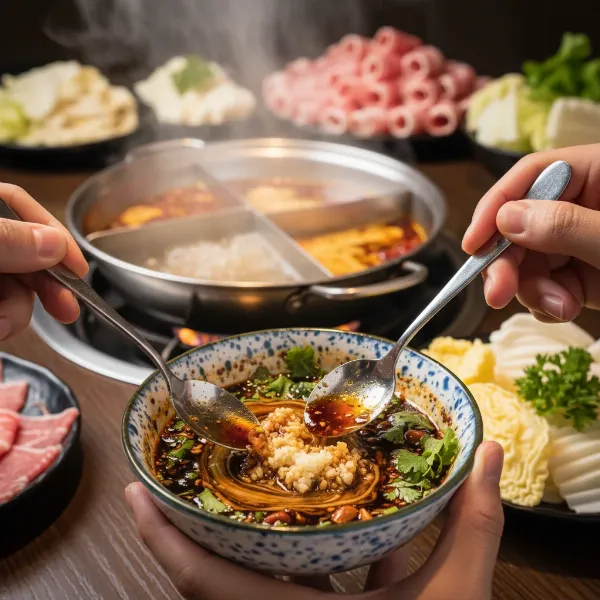 Hands mixing various ingredients into a personalized hot pot dipping sauce bowl
The Classic Umami Bomb
This is a universally loved, versatile sauce that pairs well with almost any hot pot ingredient.
- 2 tablespoons light soy sauce
- 1 tablespoon Chinese black vinegar
- 1 tablespoon minced garlic
- 1 tablespoon chopped cilantro
- 1-2 teaspoons chili oil (adjust to preference)
- ½ teaspoon sesame oil
Combine all ingredients in a small bowl and mix well.
Rich & Nutty Sesame Dream
Creamy and satisfying, this sauce is perfect for balancing spicy broths.
- 2 tablespoons Chinese sesame paste (or tahini)
- 1 tablespoon soy sauce
- ½ tablespoon Chinese black vinegar
- 1 teaspoon sugar
- 1 tablespoon hot water (to thin the paste)
- 1 tablespoon minced garlic
- 1 tablespoon chopped scallions
- 1 teaspoon chili crisp
Mix sesame paste with hot water until smooth, then add remaining ingredients and stir thoroughly.
Taiwanese Shacha Delight
A quintessential Taiwanese hot pot sauce, known for its unique savory depth.
- 2 tablespoons Shacha sauce
- 1 tablespoon soy sauce
- 1 tablespoon minced garlic
- 1 tablespoon chopped cilantro
- 1 teaspoon chili oil
- Optional: 1 raw egg yolk (mix in just before dipping for ultimate creaminess)
Combine all ingredients (except the egg yolk) and mix. Add the egg yolk if desired.
Spicy Kick for the Bold
For those who love intense heat and bold flavors, this sauce delivers.
- 1 tablespoon Doubanjiang (spicy bean paste)
- 1 tablespoon chili oil
- 1 tablespoon black vinegar
- 1 tablespoon minced garlic
- 1 teaspoon sugar
- A pinch of Sichuan pepper powder (optional)
Stir everything together until well combined.
Japanese-Inspired Miso-Sesame
A smooth, savory, and slightly sweet option, excellent with lighter broths and vegetables.
- 1 tablespoon white miso paste
- 1 tablespoon Chinese sesame paste (or tahini)
- ½ tablespoon rice vinegar
- ½ tablespoon soy sauce
- 1 teaspoon sugar
- 1-2 tablespoons warm water (to reach desired consistency)
Whisk miso paste with warm water until smooth, then incorporate other ingredients.
Setting Up Your Home Hot Pot Dipping Sauce Station
The presentation of your sauce station is almost as important as the ingredients themselves. A well-organized and appealing setup enhances the dining experience.
The Layout: Bowls, Spoons, and Labels
Arrange your ingredients in small, individual serving bowls or ramekins. Provide a dedicated serving spoon for each ingredient to prevent cross-contamination and make it easy for guests to scoop. Clear labels for each component are incredibly helpful, especially for less common ingredients, allowing guests to identify and combine flavors with confidence. A small stack of empty individual dipping bowls should also be readily available for guests to mix their creations.
Preparation: Mince, Chop, and Mix Ahead
To ensure a smooth hot pot experience, prepare all your aromatics and base sauces in advance. Mince garlic and ginger, chop scallions and cilantro, and dilute any thick pastes (like sesame paste with water) beforehand. Store these prepped items in airtight containers in the refrigerator until ready to set out. This reduces last-minute rush and lets you enjoy the company.
Presentation: Aesthetic Appeal
Use a tray or a clean, spacious area on your dining table to arrange the sauce components. Consider varying heights and textures to make the station visually inviting. Fresh garnishes like a sprig of cilantro or a whole chili can add a professional touch.
Tips for the Perfect Dipping Experience
- Start Simple, Then Experiment: Encourage guests to begin with a classic combination and then gradually add small amounts of other ingredients to discover new favorites.
- Consider Your Hot Pot Broth: A rich, spicy broth might call for a cooling, nutty sauce, while a lighter broth could be enhanced by a bright, tangy dip.
- Taste and Adjust: The most important rule of sauce mixing! Always taste your creation and adjust the ratios of salt, sweet, sour, and spice until it’s perfect for you.
- Freshness Matters: Using fresh garlic, ginger, and herbs makes a remarkable difference in the vibrancy of your sauces.
Conclusion
Creating a hot pot dipping sauce station at home is a simple yet incredibly rewarding way to elevate your hot pot gatherings. By providing a diverse array of fresh, high-quality ingredients and a few inspirational combinations, you empower your guests to craft their ideal flavors, transforming a meal into an unforgettable interactive feast. Embrace the spirit of customization and let your culinary creativity—and your guests’—shine. What new flavor combinations will you discover at your next hot pot party?
Frequently Asked Questions
What are the most essential ingredients for a basic hot pot dipping sauce station?
For a foundational station, prioritize light soy sauce, Chinese black vinegar, sesame oil, chili oil, minced garlic, chopped scallions, and fresh cilantro. These ingredients allow for a wide range of classic and customizable sauces.
Can I prepare hot pot dipping sauce ingredients in advance?
Yes, absolutely! You can mince garlic and ginger, chop scallions and cilantro, and even pre-mix some base sauces. Store these components in separate, airtight containers in the refrigerator for up to 1-2 days before your hot pot event.
How do I balance the flavors in my hot pot dipping sauce?
Aim for a balance of savory (soy sauce, oyster sauce), tangy (vinegar, ponzu), spicy (chili oil, fresh chilies), and sometimes sweet (sugar). Taste as you go, adding small amounts of ingredients until you achieve your desired profile. A touch of nutty sesame paste or oil can also add richness and depth.
Should I provide pre-mixed sauces or just individual ingredients?
It’s best to offer individual ingredients, allowing guests to personalize their own sauces. However, you can also include one or two popular pre-mixed sauces as a convenience or a starting point for those who prefer not to mix their own.
What kind of bowls should I use for the sauce station?
Small ramekins or condiment bowls are ideal for holding individual ingredients. Provide slightly larger, empty bowls for each guest to mix their custom dipping sauces.